I keep coming back to this idea that there’s no such thing as a “normal” genome. It sounds philosophical, but the more I dig into the data, the more literal it becomes. Humans love patterns, order, and clean categories, but our DNA doesn’t cooperate. It’s far more chaotic than anyone imagines.
When the first full genome was sequenced in the early 2000s, people acted like scientists had uncovered the “official” human blueprint. But that sequence mostly came from one anonymous guy in Buffalo, New York, plus a few additional samples to fill in gaps. That random person became the reference map for billions of people. Not because his genome was special: it was just the first one someone decoded.
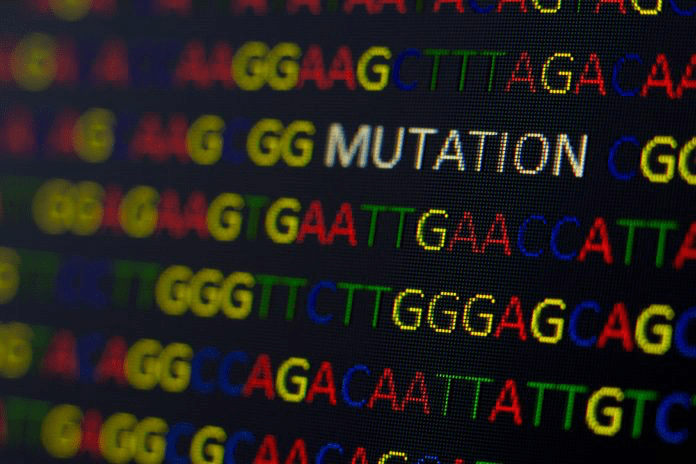
Now that thousands of genomes have been sequenced, the picture looks completely different. The average person carries 3 to 5 million genetic variants compared to that reference. Out of those, around 20,000 to 30,000 change amino acids in proteins. And here’s the part I still find wild: each of us carries dozens of “potentially damaging” mutations that, on paper, look like they should cause disease, yet most people live perfectly healthy lives. Biology isn’t fragile. It’s resilient in ways we barely understand.
There are also these things called copy number variations, chunks of DNA where some people have one copy, others have three, some have none at all. A single region can be duplicated in one person and missing entirely in another, and both individuals are still walking around, functioning normally, never knowing their genomes are structurally different.
Even entire gene losses aren’t rare. There are well-documented cases of people missing functional versions of genes like CCR5 (which protects against HIV) or UCP1 (involved in thermogenesis), and they’re completely fine. Evolution seems to care less about perfect DNA and more about whether the organism can push through the day.
And then there’s the viral stuff: about 8% of our genome is made of fossilized viruses that infected our ancestors. Some of these ancient viral genes even got repurposed by our cells; one of them, syncytin, helps form the human placenta. So the structure growing an entire human life literally depends on a retrovirus that integrated into our genome millions of years ago.
All of this makes the idea of a “normal” genome feel almost comical. There is no standard version of being human. There’s just a long spectrum of variation, millions of tiny differences layered on top of each other, none of them representing a mistake, just diversity.
I find it kind of freeing.
You’re not a slightly imperfect copy of some ideal genetic blueprint.
You are the blueprint: your own unique, messy, functioning version of it.
If anything, genetics keeps repeating a quiet message that’s easy to overlook:
normal isn’t a fixed state.
Normal is whatever works.
 YP53
YP53 
Leave a comment